Filed under:
News
Date:
01-10-2026
Filed under:
News
Date:
01-10-2026
Vandenberg Space Force Base, California — Oct 01 2026 — SpaceX Transporter-18 has successfully lifted off carrying three generations of Unibap space computers — iX20, iX10 and iX5 — on three different missions.
For Unibap, this launch brings several years of technology development together in one moment.
Our newest generation, iX20, is making its first journey to space only weeks after its public launch. Alongside it, iX10 is expanding the role of high-performance computing and AI in orbit, while iX5 continues to build on years of proven space heritage.
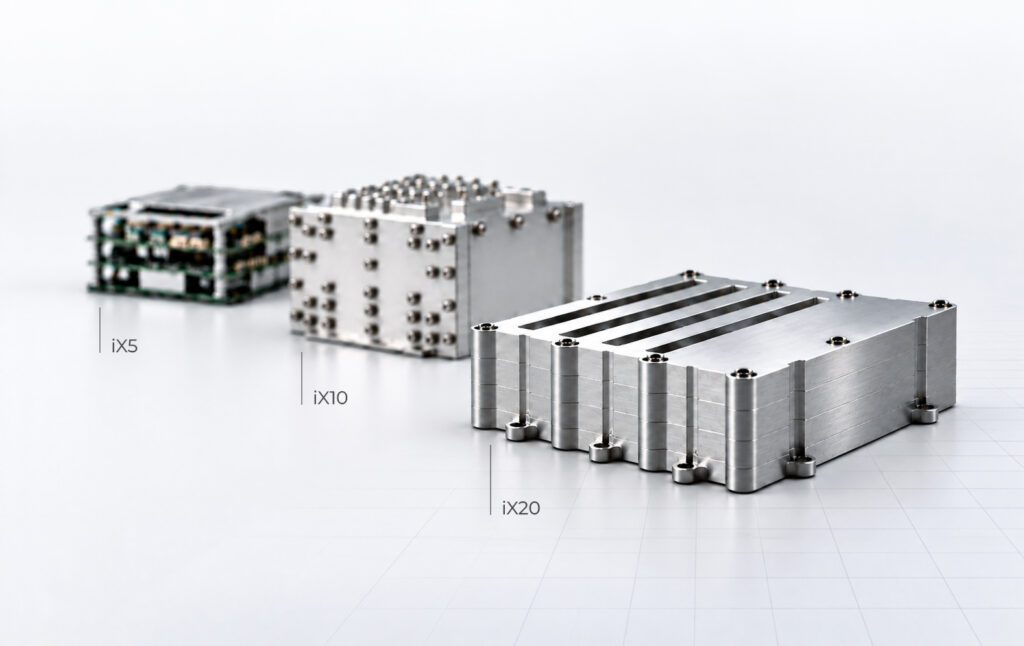
Three generations. Different missions. One trajectory toward more capable, intelligent and autonomous spacecraft.
iX20: the next generation reaches orbit
The most significant milestone for Unibap on Transporter-18 is the first flight of iX20, our next-generation edge computing platform for space.
We introduced iX20 only weeks ago. Now, the first unit has successfully launched for an in-orbit demonstration with D-Orbit.
That short path from product launch to first flight marks an important step for the new platform and reflects the growing need for significantly more computing capability onboard spacecraft.
As sensors become more capable, they generate increasingly large volumes of data. At the same time, missions require faster access to useful information, greater autonomy and less dependence on sending every piece of raw data to the ground before it can be processed.
iX20 is designed for that environment.
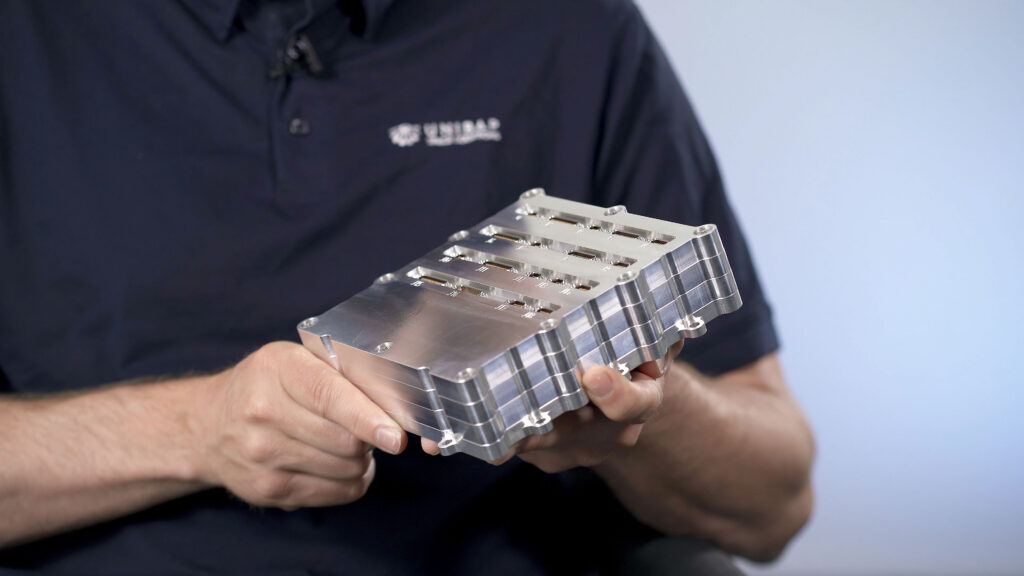
Capable of processing up to 100 Gbps of raw sensor data, iX20 combines high-performance computing, hardware acceleration, image formation and onboard AI in a real-time processing pipeline. Its standardized Expansion Module architecture enables adaptation to different payloads and spacecraft, while security is built into the platform from the outset.
Just as importantly, security is built into iX20 by design. Powered by Unibap SEQR, the platform protects mission systems and data through encryption, signing, tamper detection and secure recovery, with mechanisms designed around confidentiality, integrity and availability, helping prepare the platform for evolving cybersecurity requirements over the lifetime of a space mission.
For increasingly autonomous spacecraft, this combination matters: more intelligence in orbit also means more responsibility for protecting the computing platform, its applications and the data flowing through it.
The objective therefore goes beyond increasing compute performance. It is about allowing spacecraft to move further along the information chain themselves — from sensing, to processing, to understanding, securely and directly in orbit.
The first iX20 flight with D-Orbit, on the “The Sky Isn’t the Limit” mission aboard ION SCV Empowering Ekaterina, will provide an opportunity to demonstrate this new generation in the environment it was designed for.
👉 Learn more about “The Sky Isn’t the Limit”: https://dorbit.space/the-sky-isn-t-the-limit-october-2026/
iX10: expanding onboard computing and AI
Also aboard Transporter-18 is iX10, representing the previous major step in the evolution of Unibap’s onboard computing platforms.
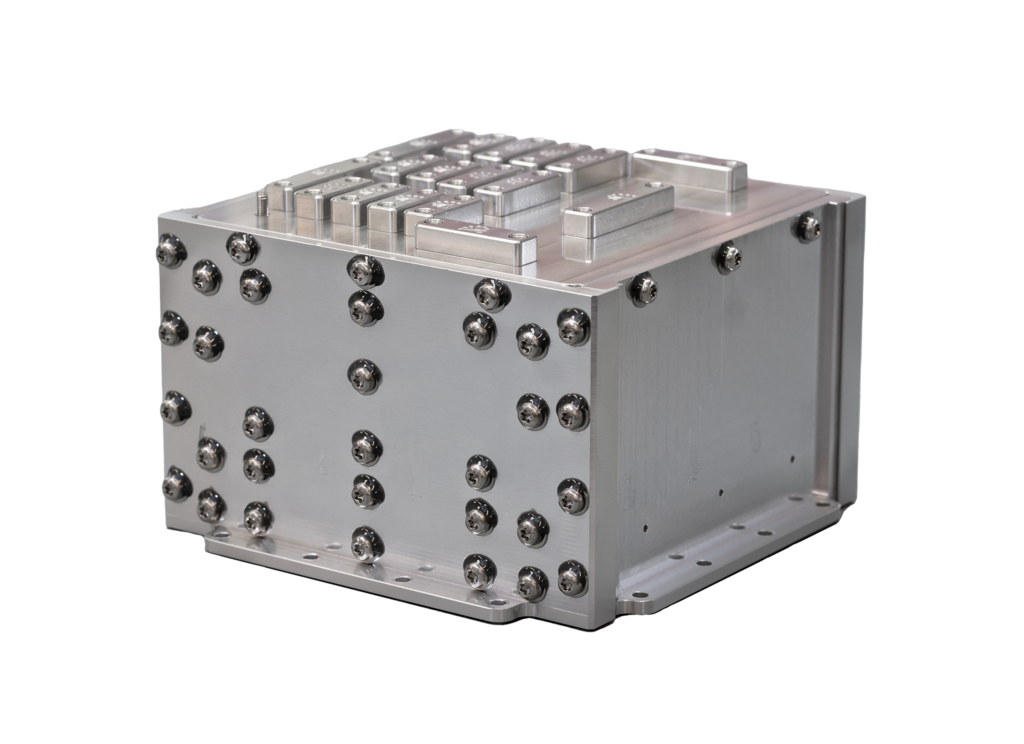
iX10 brought substantially greater computing performance, connectivity, storage and AI acceleration to demanding space applications — enabling advanced sensor processing, image formation, analytics and autonomous applications to run directly onboard.
On this launch, an iX10 is supporting Orbitworks’ Altair constellation, an AI-enabled Earth-observation architecture designed to combine advanced sensors with onboard computing and shorten the path from observation to actionable information.
The mission demonstrates a broader shift taking place across the space sector: as sensors become more powerful, the ability to process and interpret their data in orbit becomes increasingly important.
👉 Learn more about Altair:
https://orbitworks.space/altair/
iX5: proven heritage continues
Completing the three generations on Transporter-18 is iX5.
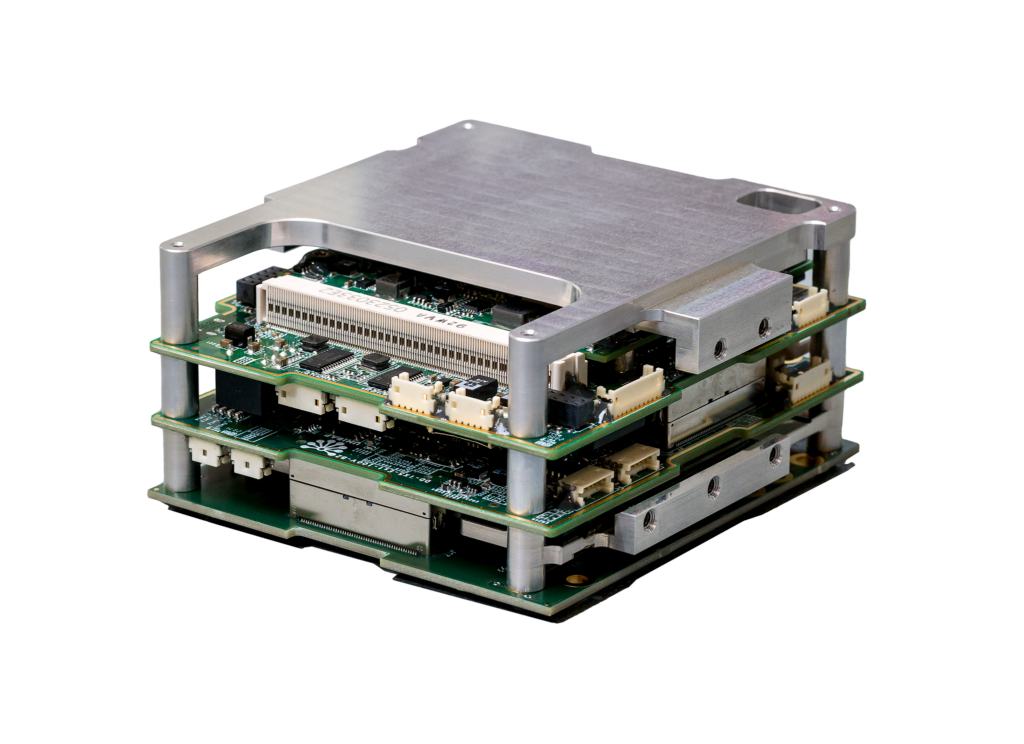
First flown in 2021, iX5 helped establish the space heritage on which Unibap’s later generations have been built. Its compact, efficient architecture combines general-purpose computing, GPU acceleration and machine-learning capability in a platform optimized for the constraints of spacecraft.
And while newer generations continue to expand what is possible, iX5 remains relevant for new missions.
On Transporter-18, iX5 is supporting the NarSha methane-monitoring constellation, where onboard computing contributes to the chain between spacecraft and optical payload and supports the mission’s ambition to identify methane emission sources with low latency.
▶️ More about Unibap collaboration with NaraSpace for NarSha constellation:
https://youtu.be/kNySH-w1Mic
One launch, one trajectory
Having iX20, iX10 and iX5 on the same launch provides a rare view of technology evolution in real time.
iX5 built heritage.
iX10 expanded onboard computing and AI capability.
iX20 takes the next step toward high-throughput intelligence generation and increasingly autonomous operations in space.
Across the generations, processing performance has increased, data interfaces have become faster, AI capability has expanded and integration has become more adaptable.
But the underlying direction has remained consistent: bring more computing closer to the sensor and enable spacecraft to do more with the data they collect.
That continuity matters.
Innovation in space is not about leaving proven technology behind. It is about building new capability on top of experience, reliability and lessons already gained in orbit.
Transporter-18 brought all three generations together on one launch — each serving a different mission, but all moving along the same trajectory.
Three generations. One launch. One trajectory.
From proven edge computing to the next generation of intelligence in orbit.